Viseur AI PIMS
(Pathology Information Management System)
Delayed diagnoses, errors in manual workflows, and system-related inefficiencies... These issues not only waste valuable time but also directly impact patient care.


Viseur AI PIMS digitizes and manages the entire pathology workflow, from sample receipt to reporting, ensuring end-to-end traceability, standardization, and operational efficiency. Fully compatible with existing hospital and laboratory infrastructures, the system minimizes manual errors, shortens reporting times and balances lab workloads.
PIMS is built on a robust infrastructure designed and developed entirely in-house by the Viseur AI engineering team, and it provides a scalable and secure solution adapted to each institution's individual needs.
"Accelerate your laboratory workflow, enhance diagnostic accuracy, and optimize operational efficiency."
Inside the Digital Pathology Workflow
Viseur AI PIMS organizes the pathology workflow into a clear, structured operational model. Each step ensures traceability, organized documentation, and clarity throughout the process.
Faster Diagnosis with Better Workflow Management
Routine tasks are automated, and documentation workflows are standardized. This reduces manual workload and shortens diagnostic turnaround times. Pathology departments can operate with greater consistency and coordination.
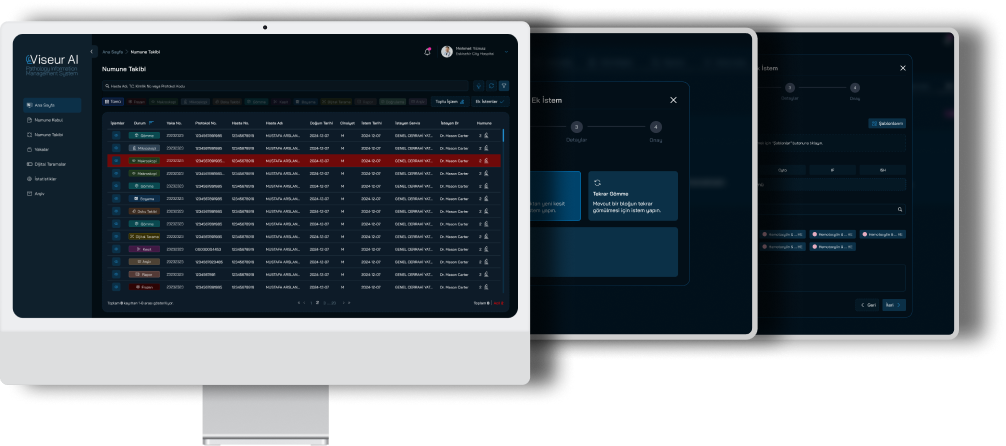
Improving Workflow Quality with Digital Pathology
Standardized reporting and AI-assisted review support reproducible diagnostic results and earlier disease detection. Additionally, it complies with global healthcare regulations, providing secure data management and protecting patient privacy.
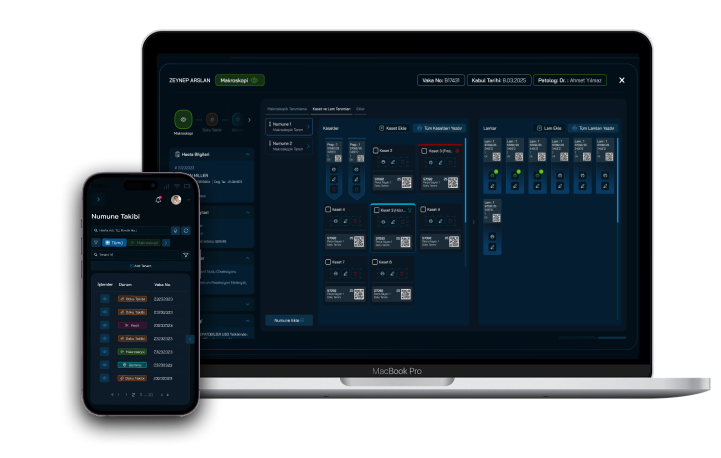
Scalable Infrastructure for Modern Pathology
Viseur AI PIMS works with both single labs and multi-site networks. It keeps shared standards while allowing workflow flexibility, enabling streamlined collaboration across different locations.
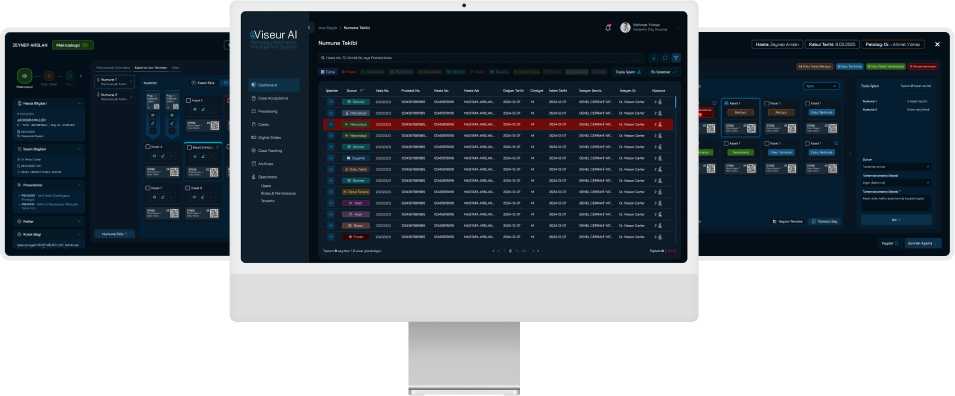
How Does Viseur AI PIMS Work?
We digitize your entire digital pathology workflow—from specimen stage to archiving—for greater efficiency, accuracy, and seamless data management.
Why Choose
Viseur AI PIMS?


Managing All Processes on a Single Platform
- Provides a fully integrated solution without requiring third-party applications for data labeling, model training and enterprise integration.
- Allows you to manage the entire process, from analysis to reporting, within a unified and scalable digital pathology system.
One Platform Comprehensive Digital Pathology
A complete digital pathology workflow spans fifteen stages, from specimen accessioning to archiving. Every manual handoff—labeling, processing, scanning, reporting—introduces the risk of errors and delays. End-to-end digitization keeps each stage traceable and consistent.
- 1Specimen Accessioning
- 2Gross Examination
- 3Cassette Preparation
- 4Tissue Processing
- 5Embedding
- 6Sectioning
Lost samples, mislabeling, and tissue degradation impact diagnostic accuracy and delay treatment. Without precision at every stage, pathology loses its reliability.
- 7Staining
- 8Slide Scanning (WSI)
- 9Image Quality Control
- 10Rescanning
Suboptimal slides, inconsistent staining, and missed details... Workflow variability affects clinical confidence. When every detail matters, uncertainty is not an option.
- 11Diagnostic Reporting
- 12Ancillary Test Request
- 13Consultation
- 14Report Sign Out
- 15Archiving
Reporting delays, missed ancillary requests, and fragmented sign-out steps... When a diagnosis depends on complete data, every handoff must be traceable.
Viseur AI PIMS
Key Features!
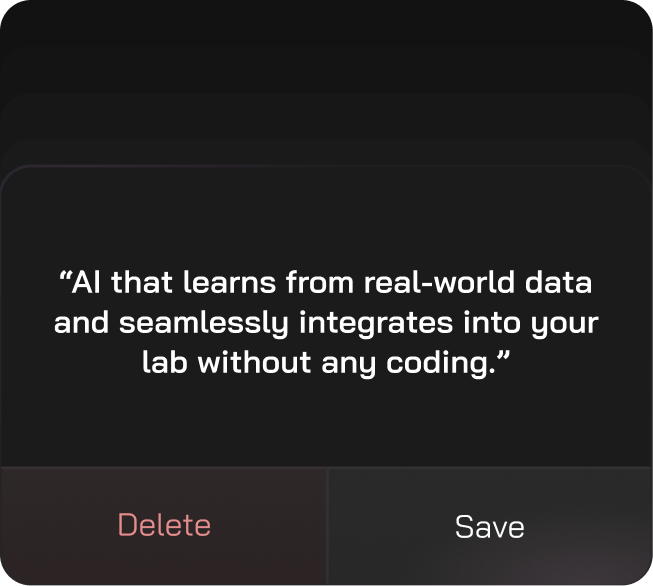
Your Data, Your AI, Your Control
AI-Assisted Diagnosis
Enhances efficiency, reducing diagnostic time and human error.
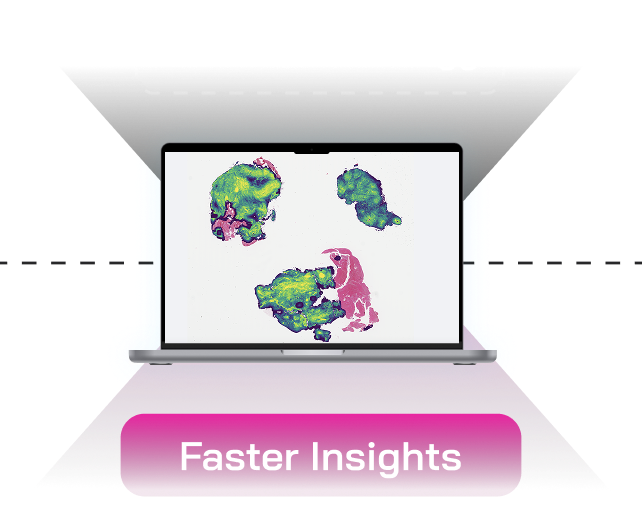
Identifies abnormalities beyond human perception for earlier diagnosis.